
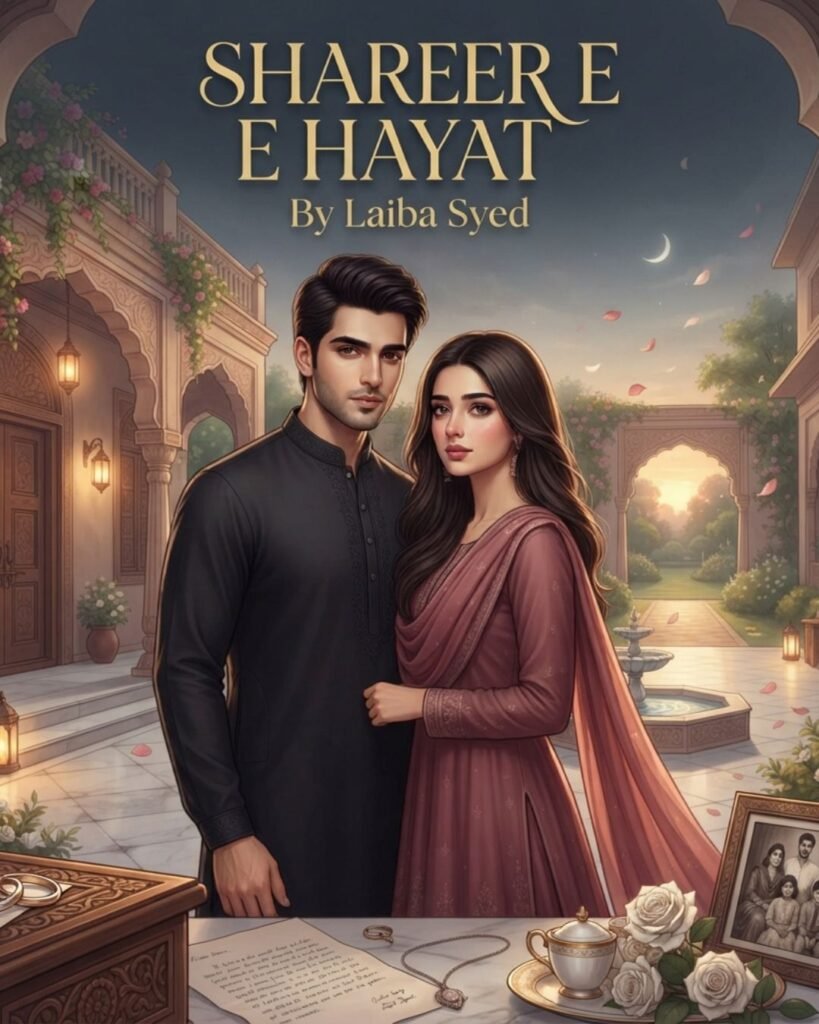
Read the complete PDF online and explore a captivating romantic story of love, family bonds, cousin marriage, emotions, and relationships.
Summary of Shareek E Hayat:
Shareek E Hayat by Laiba Syed is a short and emotionally focused Urdu romantic afsana centered on the meaning of companionship and marriage. The story presents the idea that a true life partner is not simply someone who shares happiness but someone who also stands beside their spouse during pain, illness, hardship, and emotional difficulty. The available listing categorizes it as a Cousin Marriage, Romantic Urdu work. The story revolves around Ayesha and Rafan, whose relationship develops through everyday family life, emotional attachment, care, and marital responsibility. Rather than relying on a complicated multi-family plot, the afsana focuses closely on their relationship and the emotional meaning behind being a Shareek-e-Hayat—a partner who genuinely shares both the burdens and joys of life. The published text identifies the work as an afsana by Laiba Syed.
Characters:
- Rafan – Rafan is the central male character of Shareek-e-Hayat and Ayesha’s husband. He is portrayed as caring, protective, emotionally attentive, and deeply concerned about his wife’s well-being. His personality becomes especially apparent when Ayesha is distressed or physically unwell.
- Ayesha – Ayesha is the female protagonist of the afsana and Rafan’s wife. She is portrayed as sensitive, emotional, and vulnerable, particularly during moments of physical or psychological distress. Her emotional nature gives Rafan opportunities to demonstrate his caring personality.
Supporting Characters:
- Ayesha’s Mother – Ayesha’s mother is part of the family environment surrounding the story. Her presence reflects the traditional family structure and the concern of parents for their daughter’s well-being.
- Ayesha’s Relatives – The wider family members contribute to the domestic and social environment of the story, helping establish the traditional setting in which Ayesha and Rafan’s relationship develops.
- Rafan’s Family Members – Rafan’s relatives form part of the household and family atmosphere surrounding the couple. Their presence adds a social and familial dimension to the central relationship.
- Family Elders – The elders represent the traditional family structure and the importance of marriage, responsibility, and family relationships within the story.
Plot Overview:
The story begins with Ayesha in an emotionally distressed state, where her tears and vulnerability immediately attract Rafan’s attention. He approaches her with concern and repeatedly asks what has happened. His response establishes an important aspect of his character: rather than ignoring Ayesha’s emotions, he wants to understand and comfort her.
As the narrative continues, the relationship between Ayesha and Rafan becomes the primary focus. Their interactions demonstrate an affectionate marital bond in which Rafan is attentive to even small changes in Ayesha’s mood and condition. His protective behavior reflects a relationship based not only on romantic attraction but also on emotional responsibility.
Ayesha’s physical vulnerability becomes another important element of the story. When she faces illness and medical difficulties, Rafan remains deeply concerned about her condition. His anxiety demonstrates how strongly he has become emotionally connected to her, while his efforts to remain present emphasize the importance of companionship during difficult circumstances.
The domestic scenes also show how traditional family life surrounds the couple. Relatives and family members become part of the atmosphere in which Ayesha and Rafan live, creating moments of concern, affection, teasing, and emotional interaction. These scenes help establish marriage as something connected to wider family relationships rather than existing in isolation.
Rafan’s treatment of Ayesha becomes increasingly significant as the story progresses. His willingness to care for her, remain beside her, and take responsibility for her well-being turns his love into something practical and meaningful. Ayesha, in turn, recognizes the security and emotional comfort that comes from having a partner who genuinely values her.
The story concludes around the central idea represented by its title: a Shareek E Hayat is someone who shares both grief and happiness. Through Ayesha and Rafan’s relationship, Laiba Syed presents companionship as a combination of love, care, patience, responsibility, protection, and emotional presence. The story ultimately emphasizes that the real value of marriage becomes visible when partners stand together through life’s difficult moments as well as its joys.
Themes:
- Romantic Love
- Marriage
- Cousin Marriage
- Life Partnership
- Emotional Support
- Care and Protection
- Husband-Wife Relationship
- Family Bonds
- Sacrifice
- Responsibility
- Trust
- Loyalty
- Emotional Attachment
- Companionship
- Patience
- Understanding
- Illness and Care
- Traditional Family Values
- Marriage Responsibilities
- Shared Happiness
- Shared Hardship
- Emotional Security
- True Partnership
Conclusion:
Shareek E Hayat by Laiba Syed is a concise yet emotionally focused Urdu romantic afsana that centers on the relationship between Ayesha and Rafan. Rather than depending on an elaborate plot, the story uses intimate domestic moments to explore what makes a marriage emotionally meaningful. Rafan’s character is particularly important because his love for Ayesha is expressed through care and responsibility. His concern during her moments of distress and illness demonstrates that companionship is not limited to romantic expressions; it also involves being present when the other person needs support the most. Ayesha’s emotional and sensitive personality complements Rafan’s protective nature. Their relationship illustrates how emotional security can develop when two people trust each other and recognize their responsibilities toward one another.
The title Shareek E Hayat captures the central message of the story: a true life partner is someone who becomes a companion in both sorrow and happiness. Through its focus on love, marriage, care, family, sacrifice, and emotional support, Laiba Syed’s afsana presents a simple but meaningful portrayal of marital companionship.
Mohabbat Dil Pe Dastak Urdu Novel by Iffat Sehar Tahir