
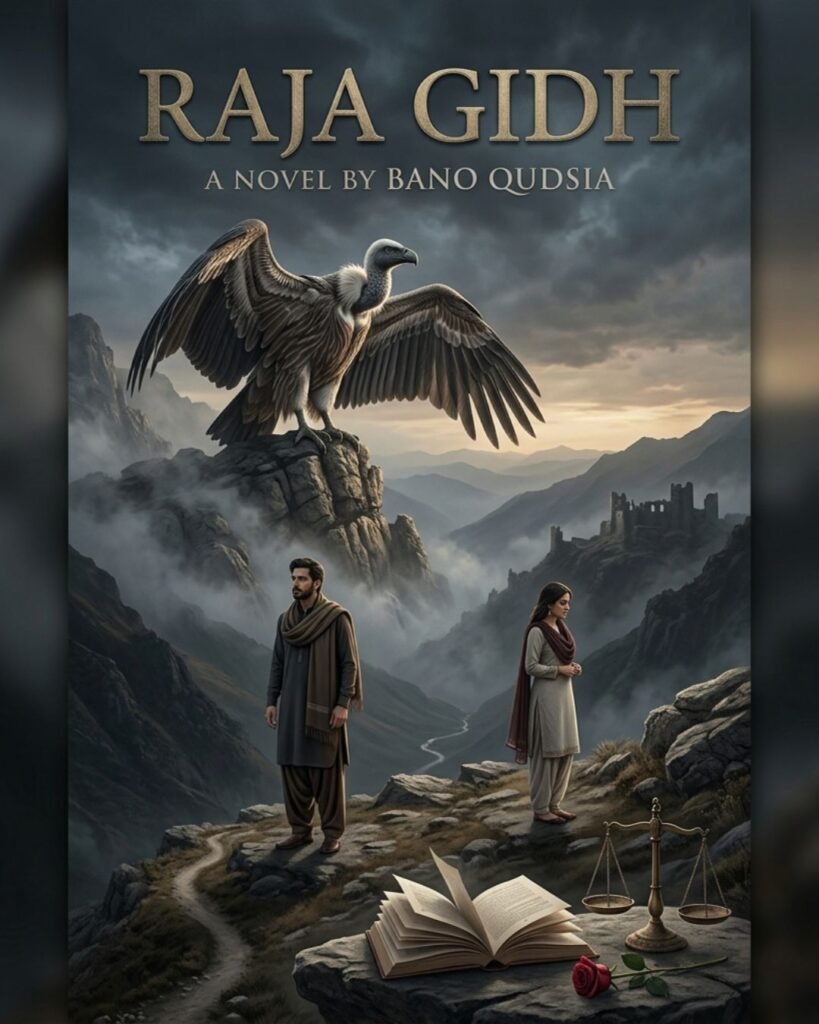
Read Raja Gidh by Bano Qudsia online and download the PDF to explore themes of love, morality, human psychology, obsession, and spiritual consequences.
Summary of Raja Gidh:
Raja Gidh by Bano Qudsia is a celebrated Urdu novel originally published in 1981. Through complex relationships, unfulfilled love, and philosophical reflections, it explores human psychology, morality, and spiritual consequences. The story follows characters navigating emotional conflicts, desire, and social expectations while examining the relationship between human behavior and ethical choices, making it a landmark of Urdu literature.
Characters:
- Qayyum – A central character whose emotional struggles, desires, and personal experiences contribute to the novel’s exploration of human psychology and morality.
- Seemi Shah – A significant female character whose romantic relationships and emotional experiences shape important developments in the story.
- Aftab – A key character connected to the central relationships and philosophical questions explored throughout the novel.
Supporting Characters:
- Professor Sohail – A character associated with intellectual discussion and the novel’s philosophical exploration of human behavior.
- Abdul Wahab – A supporting character connected to the social and personal relationships surrounding the main characters.
- Family Members and Acquaintances – These characters help establish the social environment and highlight the pressures influencing the protagonists’ choices.
Plot Overview:
Raja Gidh introduces readers to a world where love, desire, morality, and human psychology intersect. Through its central characters, the novel explores the emotional complexity of relationships and the consequences of unfulfilled feelings. Bano Qudsia builds a narrative that extends beyond conventional romance, inviting readers to reflect on human nature, personal choices, and the ethical questions that shape everyday life.
Qayyum’s experiences form an important part of the novel’s exploration of longing, attachment, and emotional conflict. His relationships reveal how desire can influence judgment and complicate personal decisions. Through his perspective and interactions with others, the story examines the difference between emotional satisfaction and lasting fulfillment, presenting characters whose inner struggles reflect broader questions about human behavior and responsibility.
Seemi Shah’s character adds emotional depth to the narrative through themes of love, rejection, and psychological vulnerability. Her relationships illustrate the difficulties of navigating personal desires within complicated social circumstances. As the characters confront emotional disappointments and changing expectations, the novel considers how unresolved feelings can affect identity, relationships, and the ability to make choices that lead toward genuine happiness.
Alongside its romantic storyline, the novel develops philosophical questions about morality, spirituality, and the consequences of human actions. Its discussions encourage readers to consider whether individual desires can be separated from ethical responsibility. The symbolism of the vulture becomes central to these reflections, connecting the natural world with the author’s broader questions about instinct, corruption, and the spiritual dimensions of human existence.
Raja Gidh ultimately stands out for combining psychological storytelling with philosophical reflection. Rather than offering a simple romantic resolution, Bano Qudsia encourages readers to question their assumptions about love, morality, and human nature. The novel’s enduring appeal comes from its ability to provoke discussion about personal responsibility, emotional attachment, spiritual awareness, and the complicated relationship between individual desires and ethical living.
Themes:
- Love and Obsession
- Human Psychology
- Morality and Ethics
- Spirituality
- Desire and Attachment
- Social Expectations
- Human Nature and Instinct
Conclusion:
Raja Gidh by Bano Qudsia remains one of the most influential works in Urdu literature. First published in 1981, this thought-provoking novel combines emotional storytelling with philosophical questions about love, morality, psychology, and spirituality. Its memorable characters and symbolic imagery encourage readers to examine human desires and ethical responsibilities. Readers interested in classic Urdu fiction can explore this literary masterpiece through legitimate reading and book-purchasing options.
Your Favorite Urdu Novels Are Just a Click Away:
Mahi Ka Hero Urdu Novel by Areej Shah




One Comment