
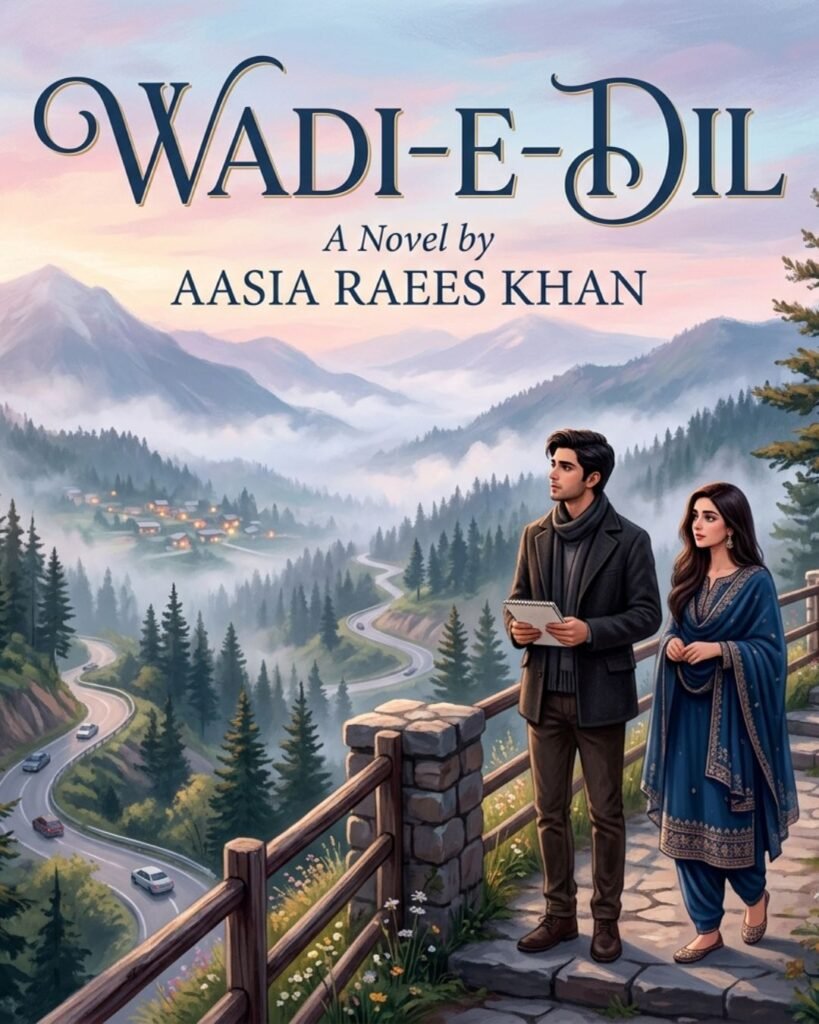
Read a detailed review of the full story, main characters, plot, themes, and ending of Wadi-e-Dil by Aasia Raees Khan.
Summary of Wadi-e-Dil:
Wadi-e-Dil is an emotional family and romantic drama by Aasia Raees Khan that unfolds against the backdrop of a scenic hill station and a divided joint family. The story follows Haider, a young man whose chance meeting with a guarded, secretive girl named Bela during a mountain trip becomes entangled with old family disputes, false accusations, broken trust, and the long road toward forgiveness. Through generations of relatives bound by both love and resentment, the novel examines how truth eventually resurfaces and how wounded hearts can heal.
Characters:
- Haider – Haider is the central character of the novel, a thoughtful and somewhat reserved young man who travels to a hill station for a change of routine. His unexpected encounter with Bela draws him into a mystery he does not initially understand, and over time his sense of responsibility toward his family and his growing feelings for her shape the course of the story.
- Bela – Bela is an intriguing and guarded young woman staying at the same resort as Haider. She initially hides her real identity and past, responding to his curiosity with sharp, evasive answers. As layers of her story unfold, readers discover a past marked by injustice, suspicion, and heartbreak, which explains her defensive and mistrustful nature.
Supporting Characters:
- Sameela – Sameela is a woman whose life has been shaped by family betrayal and false blame. Wrongly accused within her own household, she carries deep resentment and hurt, and her strained relationships with relatives form one of the novel’s most emotionally charged threads.
- Shafia – Haider’s sister, who plays an important supportive role within the family. She is closely involved in the discussions, decisions, and reconciliations that take place as the story moves toward its resolution.
- Waqar Ahmed – An engineer connected to the family through a proposed marriage alliance. His entry into the family brings a fresh perspective and eventually contributes to easing some of the household’s long-standing tensions.
- The elder aunts and family matriarchs – Several senior women in the family, including watchful aunts and a respected grandmother figure, represent the old customs, unspoken grudges, and inherited disputes that continue to influence the younger generation’s choices.
Plot Overview:
Wadi-e-Dil opens with Haider arriving at a picturesque hill station, seeking distance from the routine pressures of daily life. There, amid winding mountain roads and quiet resorts, he crosses paths with Bela, a young woman whose sharp remarks and guarded manner immediately set her apart. Their early conversations are marked by suspicion and playful sparring rather than warmth, yet Haider finds himself increasingly curious about the woman who refuses to reveal even her real name.
As the two spend more time together, exploring scenic spots and exchanging cautious conversations, small cracks begin to appear in Bela’s defenses. Haider senses that her aloofness is not simple arrogance but a shield built from past pain. Meanwhile, back home, an entirely different kind of tension is brewing within Haider’s extended family, where old disputes over property, misplaced blame, and unresolved resentment continue to simmer beneath the surface of everyday interactions.
The narrative shifts to reveal Sameela’s story, a woman unfairly accused within her own household and left to carry the weight of suspicion and rejection for years. Her strained ties with relatives, including sharp exchanges with aunts and cousins, highlight how quickly trust can collapse under the pressure of assumption and pride. Her situation runs parallel to Bela’s own guarded past, suggesting that both women have been shaped by circumstances beyond their control.
Back at the hill station, Haider and Bela’s relationship deepens despite her resistance. She eventually adopts the name Bela almost on impulse, unwilling to share her true identity, yet unable to fully avoid the connection growing between them. Their exchanges grow more personal, touching on trust, judgment, and the courage it takes to let someone in after being hurt before. Haider’s patience and steady interest slowly begin to soften her defenses.
As family matters intensify, marriage proposals, old accusations, and questions of inheritance come to a head, forcing several characters to confront choices they had long avoided. Shafia and other family members work to mediate disputes, while Waqar Ahmed’s presence introduces a stabilizing influence into the household’s turbulent dynamics. The overlapping storylines of romance and family conflict begin to draw closer together as truths that were long buried start to surface.
In its final chapters, Wadi-e-Dil brings both threads to an emotional resolution. Bela’s true story is revealed, explaining the injustice and heartbreak that shaped her guarded nature, while the family’s internal disputes move toward reconciliation as misunderstandings are finally addressed. Haider’s steadfastness proves instrumental in helping those around him find closure, and the novel closes on a note of healing, where love and honesty triumph over suspicion and old wounds.
Themes:
- Love
- Family conflict
- Trust and mistrust
- Injustice
- False accusations
- Self-respect
- Forgiveness
- Identity and disguise
- Reconciliation
- Marriage and family expectations
- Healing from the past
- Loyalty
Conclusion:
Wadi-e-Dil is a moving story of two intertwined struggles: a hesitant romance built on distrust and gradual honesty, and a family torn apart by old wounds and false blame. Aasia Raees Khan weaves Haider and Bela’s evolving relationship together with Sameela’s painful past and the wider family’s unresolved disputes, creating a narrative rich with emotional depth. The novel ultimately reminds readers that true connection requires patience, courage, and the willingness to forgive, and that even the deepest misunderstandings can be healed with honesty and time.
Mentalist Urdu Novel by Muskan Usman

One Comment