
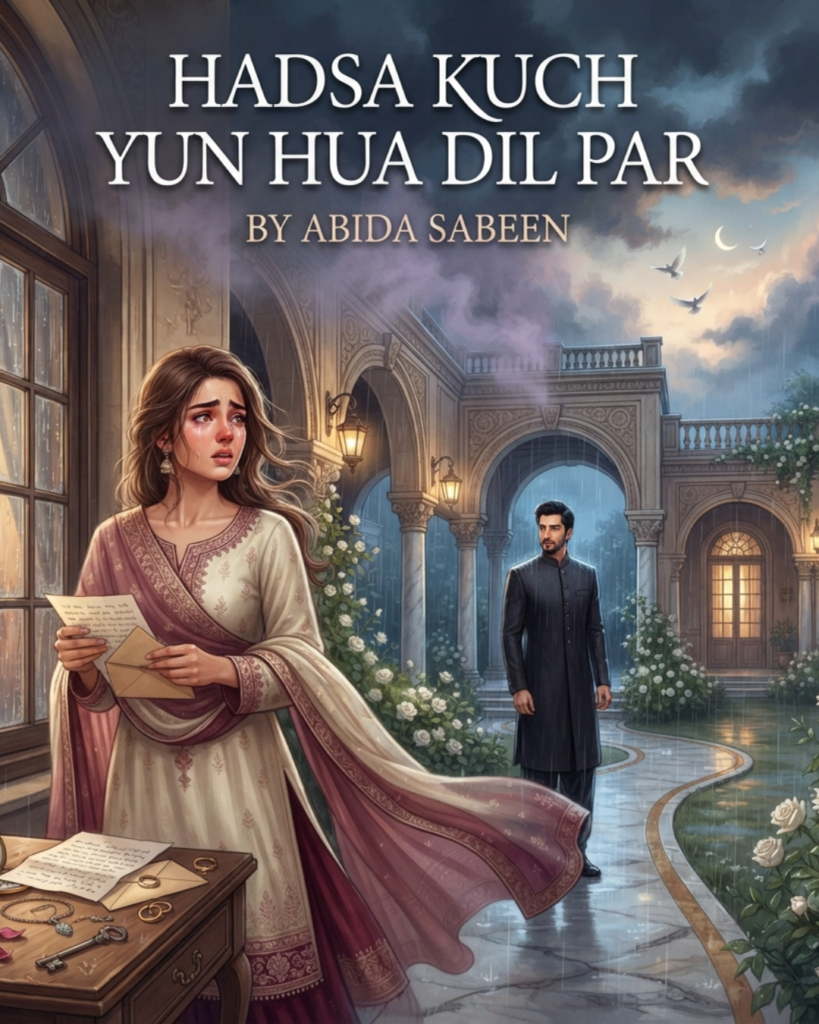
Read a detailed overview of the novel, including its summary, themes, characters, and social-romantic aspects.
Summary of Hadsa Kuch Yun Hua Dil Par:
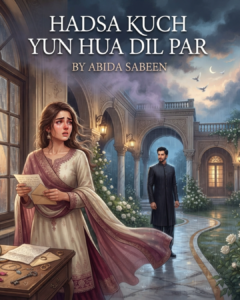
Hadsa Kuch Yun Hua Dil Par by Abida Sabeen is a social-romantic Urdu novel that appeared in a monthly digest. Available online introductions describe it as a story with emotional and social themes. The title suggests an incident that deeply affected the heart; however, the complete plot and specific characters are not clearly detailed in the available information. Reading the full text is necessary to understand the actual story.
Characters:
- Hamza – A serious and responsible young man torn between family expectations and his own personal desires. Initially, he avoids expressing his emotions, but circumstances compel him to reconsider his decisions.
- Hoorain – A sensitive, self-respecting, and emotional young woman who views love not merely as a matter of feelings, but as a bond rooted in trust and respect. An unexpected event in her life alters both her perspective and her future.
Supporting Characters:
- Faraz – Hamza’s close friend, who shows him another side of reality during difficult times.
- Maham – Hoorain’s sister, who strives to understand her feelings and support her through tough decisions.
- Rasheed Sahib – Hamza’s father, whose stern nature and traditional mindset influence several key decisions.
- Naila Begum – Hoorain’s mother, who remains deeply concerned about both her daughter’s future and her emotional well-being.
- Salman – A family member who exacerbates misunderstandings and creates conflict within the story.
Plot Overview:
Hadsa Kuch Yun Hua Dil Par is a social-romantic novel authored by Abida Sabeen. It is listed as an Urdu novel in online book catalogs, while older introductory pages describe it as a work originally published in a monthly digest. This information indicates that the novel is grounded in human emotions, social relationships, and romantic themes, although the complete sequence of events is not currently available.
The connection between “accident” (hadsa) and “heart” (dil) in the title evokes the sense of a turning point that alters ordinary life. However, available search results provide only basic information regarding genre and publication. Consequently, it would be inaccurate to attribute the story to any specific accident, character decision, location, or event without further confirmation. Only those aspects substantiated by available introductions are presented here.
In social-romantic literature, personal emotions and the social environment typically intertwine, and available sources place this novel within this same category. Introductions to Hadsa Kuch Yun Hua Dil Par classify it among Urdu novels. On this basis, the work can be viewed as a blend of relationships, emotional states, and social context, though the specific stories of individual characters cannot be recounted. Details are unavailable. A defining characteristic of this novel is its association with a monthly digest. Online records from September 2014 introduce it as a social-romantic Urdu novel, and archival pages also identify it as a work published in a monthly digest. This indicates that the novel established a place within the tradition of Urdu fiction written for digest readers, although full details regarding the original issue are currently unavailable.
The available material does not list the names, relationships, ages, professions, or concluding events associated with the novel’s central characters. Consequently, speculating about the names of the hero, heroine, or supporting characters would compromise the article’s research accuracy. It is best for readers to view the novel as a social-romantic work by Abida Sabeen and to regard the original digest text as the primary source for definitive information regarding the characters or the complete storyline.
Overall, available information identifies Hadsa Kuch Yun Hua Dil Par as a social-romantic work by Abida Sabeen that was published in a monthly digest. While online listings and introductory pages exist, a reliable account of the full plot and character details is not available. Therefore, rather than including unverified events, this article limits its scope to a confirmed introduction and a discussion of the work’s literary nature.
Themes:
- Love
- Social relationships
- Emotional conflict
- Romantic sentiments
- Social environment
- Human behavior
- Matters of the heart
- Complexity of relationships
Conclusion:
Hadsa Kuch Yun Hua Dil Par is a social-romantic Urdu work by Abida Sabeen. Information regarding its publication in a monthly digest and its social genre is verifiable; however, reliable details concerning the full plot, character names, and the ending are unavailable. That is why, when providing an accurate introduction, it is appropriate to avoid conjecture and regard the original text as the primary source.
Mohabbat Rooth Jaye To Urdu Novel by Abida Sabeen

One Comment