
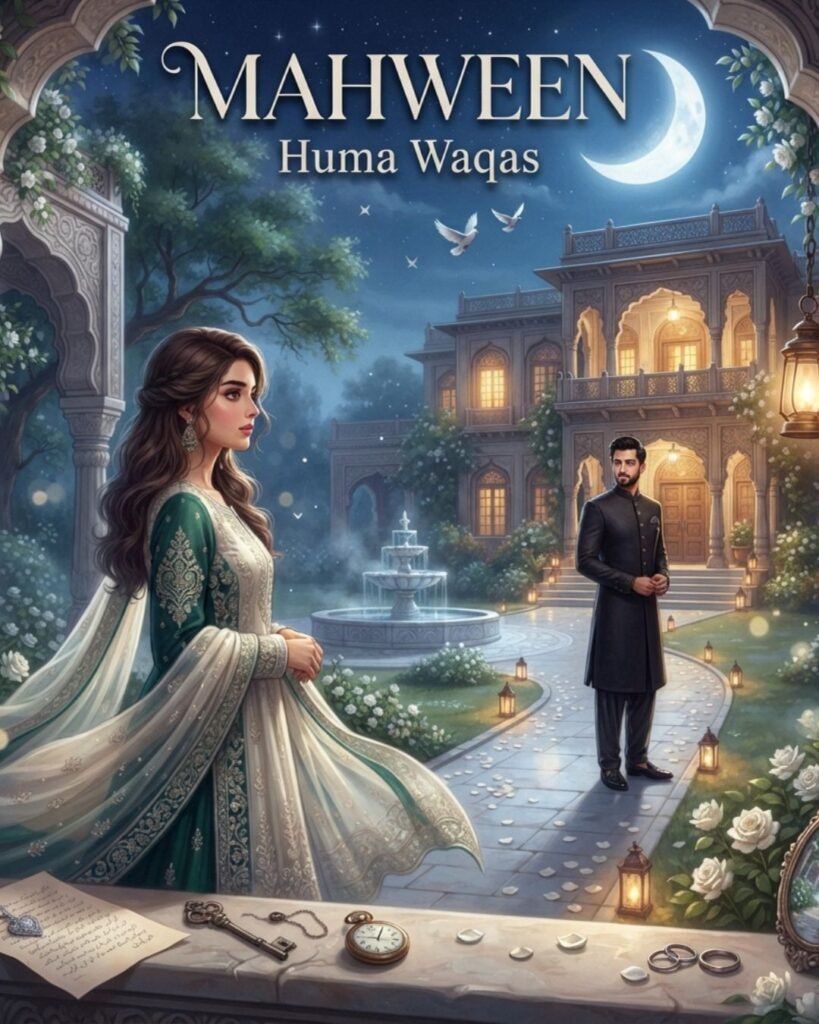
Read a detailed review of the novel, covering the complete story, summary, central characters, plot, themes, and its romantic and social aspects.
Summary of Mahween:
Mahween by Huma Waqas is a romantic Urdu novel that highlights the complexities of relationships, family pressure, and evolving emotions. According to available introductions, the story revolves around cousin relationships, forced marriage, and emotional transformation. The characters make decisions driven by circumstances, but over time, growing closeness and trust alter their attitudes, leading their relationships in a new direction.
Character:
- Mahveen – Apart from the novel’s title, available search results do not provide a comprehensive or verified profile of Mahveen; therefore, unverified details regarding this character have been excluded.
- Male Lead – The male lead’s personal name is not explicitly mentioned in available online introductions. Story summaries indicate that he is central to the dynamic formed by a cousin relationship and a forced marriage.
Supporting Characters:
- Family Elders – Decisions made by elders and traditional expectations appear significant within the story’s family backdrop, influencing matters of relationships.
- Close Relatives – Given the cousin relationship and family environment, close relatives shape the story’s social context.
- Family Circle – The extended family circle highlights the pressures surrounding the characters’ decisions, marriage, and relationships.
Plot Overview:
The story unfolds within a family setting where the closeness of relationships influences decision-making. Due to their cousin relationship, the characters are familiar with one another, yet the nature of their emotions remains ambiguous at the outset. Family expectations and circumstances gradually create a situation where personal desires must be set aside. This context eventually leads to the decision of marriage and puts their relationship to the test.
The central conflict intensifies when the matter of marriage becomes driven more by family circumstances than by the characters’ own wishes. The element of forced marriage serves not merely as an event in the story, but as the catalyst for an emotional transformation. Apprehensions and misunderstandings further complicate their relationships. On one hand, the family considers its perspective correct; on the other, the individuals involved strive to understand their own emotions. At this stage, despite physical proximity, emotional distance persists.
Circumstances take a different turn after marriage. A relationship that initially seemed like a mere familial bond begins to acquire new meaning through daily life, shared experiences, and interactions. Initial resentment or uncertainty does not vanish instantly; instead, it gradually shifts as events unfold. The individuals come to understand each other’s habits, weaknesses, and priorities. This process of observation bridges the emotional gap and lays the foundation for trust within the relationship.
The emotional transformation in the story does not occur in a single moment but evolves through various situations. When faced with difficulties, disagreements, or pressure, the individuals view each other’s reactions from a new perspective. Issues that once caused grievances later become sources of understanding and empathy. The relationship evolves into a personal bond, and the emotional state shifts; the connection becomes truly felt.
The family environment plays a role during this transformation. Expectations from relatives, ingrained mindsets, and societal notions regarding marriage raise questions for the individuals. They must determine whether the relationship relies solely on a decision or if mutual trust is also essential. It is within this internal struggle that emotions become clear. The story illustrates that when one begins to understand the other’s state of mind, distances can shrink, and the relationship gains a solid foundation.
In the final stages, emotional complexities are resolved, and the individuals seriously contemplate the reality of their relationship. A bond that began with a forced decision acquires genuine meaning over time. Misunderstandings diminish, trust grows, and the pressures associated with family are confronted with maturity. Thus, the story portrays the romantic relationship not merely as a matter of emotional attraction, but as a journey of understanding, acceptance, and evolving attitudes one where the bond finds a solid new foundation.
Themes:
- Cousin relationship
- Forced marriage
- Family pressure
- Romantic relationship
- Emotional transformation
- Mutual trust
- Misunderstandings
- Complexity of relationships
- Societal expectations
- Acceptance
Conclusion:
This is a romantic story by Mahveen Huma Waqas that intertwines family dynamics, forced marriage, and shifting emotions. Based on available information, the novel’s focus…It centers on the complexities of relationships and emotional transformation. The distance between the characters diminishes over time, and trust becomes paramount. This very journey imbues the story with emotional depth and conveys the significance of relationships to the reader.
Deed E Qalb Urdu Novel By Huma Waqas





One Comment