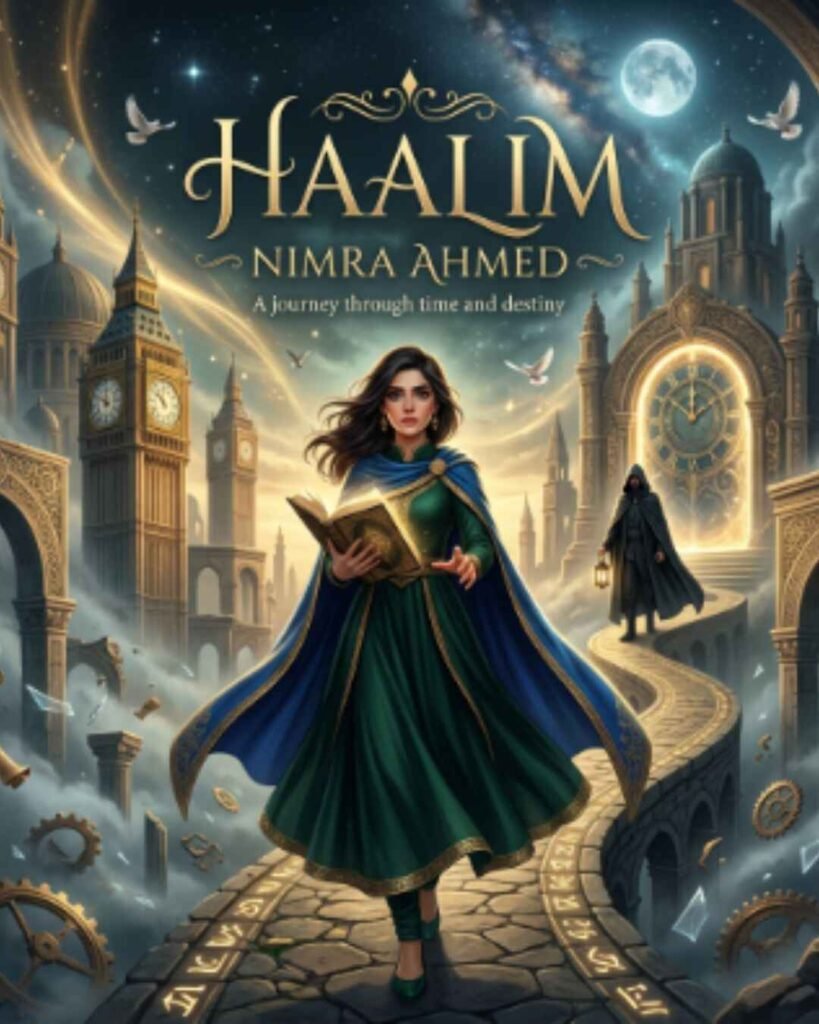
Halim is a famous Urdu novel that presents time travel, politics, spirituality, destiny, self-accountability, and human consciousness in a unique and thrilling story.
Summary of Halim:
Halim by Nimra Ahmed is an extraordinary Urdu novel that presents the amazing connection between the past, present, and future in a very unique way. The story revolves around power, conscience, time, faith, and human decisions. The main characters experience self-discovery and spiritual transformation while going through the complex journey of their mistakes, desires, and destiny.
Characters:
- Talia Murad – Talia Murad is an intelligent, responsive, and exceptionally intelligent young girl. She faces difficulties with her cleverness, but over time, she realizes that real success is not hidden in wealth or power but in truth, faith, and right decisions. Her character undergoes the most significant transformation in the novel.
- Raees Ahmed – Raees Ahmed is a principled, dignified, and strong-willed person. He prioritizes justice, honesty, and responsibility in all situations. His steadfastness and unwavering character not only give stability to the story but also become a source of guidance for other characters.
Supporting Characters:
- Aftab – Aftab is an intelligent and politically insightful character who has the ability to understand the complexities of power. His presence makes the political conflict in the story more interesting.
- Dr. Zaryab – Dr. Zaryab has a research-oriented personality. He looks at questions related to time, consciousness, and the human mind in a scientific way and plays a significant role in explaining many important secrets.
- Nadia – Nadia is a gentle, understanding, and sincere character. She encourages others with positive thinking in difficult situations and plays an important role in maintaining emotional balance.
- Senator Sikandar – Senator Sikandar is an influential political leader whose decisions highlight the conflict between power, authority, and public interest. His personality further strengthens the political aspect of the novel.
Plot Overview:
Halim begins in a world where different characters seem busy with their separate lives, but fate brings them together on a common path. At first, the events seem ordinary, but soon extraordinary circumstances arise that slowly begin to remove the veil between time, memory, and reality.
Talia Murad, facing unexpected events, realizes that her life is not limited to the present moment. Mysterious dreams, strange experiences, and constantly changing circumstances lead her to secrets that connect the past and the future. This stage gives the story a unique fantasy and suspenseful color.
Meanwhile, the political landscape also changes rapidly. The race for power, secret plans, and decisions of powerful figures change the fate of many characters. The conflict between personal interests and national responsibilities creates realism in the novel and keeps the reader constantly curious.
In the middle of the story, the concept of time emerges in a new way. The characters try to understand the effects of their past and the possibilities of the future. They realize that every decision affects the coming moments. This philosophy makes the novel completely different from traditional romantic stories and intellectually unique.
As new aspects of reality emerge, the characters face their weaknesses, mistakes, and desires. Some people lose everything in the intoxication of power, while others start a new life by listening to the voice of their conscience. Faith, repentance, and self-accountability become the basic elements of the story at this stage.
In the end, all the mysterious series reach their logical conclusion, and the answers to the questions about time gradually become clear. Talia and the other characters learn that destiny does not eliminate human agency but rather increases the responsibility for making the right choice. The novel concludes with a strong message of hope, awareness, and complete trust in God.
Iblees Urdu Novel by Nimra Ahmed.
Themes:
- Time Travel
- Destiny and Authority
- Politics and Power
- Faith and Spiritual Transformation
- Self-Accountability
- Justice and Integrity
- Human Consciousness
- Past, Present, and Future
- Moral Responsibility
- Suspense and Curiosity
- Personality Development
- Hope and Reformation
Conclusion:
Halim is an extraordinary masterpiece by Nimra Ahmed that combines fantasy, politics, philosophy, spirituality, and human psychology brilliantly. Strong characters, intricate plot, and a unique concept of time make it one of the memorable novels of Urdu literature. This novel not only gives the reader an interesting story but also encourages thinking, self-accountability, and making better decisions.
You have to read more novels you might interested: