
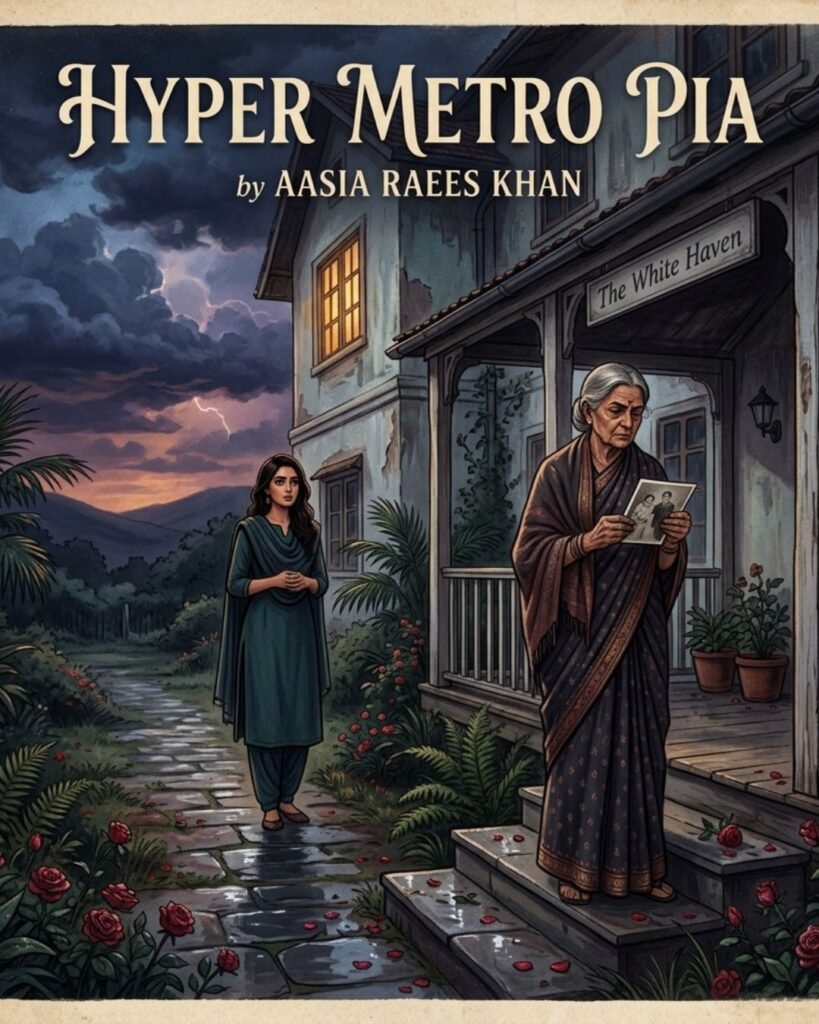
Read a detailed review of the full story, main characters, plot, themes, and ending of Hyper Metro Pia by Aasia Raees Khan.
Summary of Hyper Metro Pia:
Hyper Metro Pia is a family and romantic drama by Aasia Raees Khan that unfolds through the memories of an old colony house and the sharp, commanding voice of a grandmother who has carried the weight of the past for decades. The story follows a young granddaughter who has inherited her grandmother’s temperament and beauty, and who now finds herself standing at the same crossroads her mother once faced between a practical marriage proposal and the pull of love and desire. Through old photographs, half-told stories, and a dramatic storm-filled night, the novel explores how one generation’s choices continue to shape the next.
Characters:
- Shani – Shani is the young granddaughter at the center of the story. Having inherited her Nani’s sharp tongue and striking looks, she is pulled between a respectable doctor’s marriage proposal and her own restless heart. Her journey reflects the conflict between duty and desire that defines the entire novel.
- Nani (the grandmother) – Nani is the emotional anchor of the story, a woman whose harsh exterior hides a lifetime of buried grief and sacrifice. Her stories about the past, her disapproval of unlawful matches, and her insistence on practical marriage shape every major decision in the household.
Supporting Characters:
- Doctor Sahab – The suitor proposed for Shani by her family, representing stability, respectability, and a safe future built on practicality rather than passion.
- Ahmed Hassan – A figure tied to wealth, beauty, and an old love story from the past whose presence continues to stir emotion and temptation long after the events he was part of.
- Shani’s mother – A woman whose own youthful choices and unspoken heartbreak echo through the household, quietly influencing how Nani now guards her granddaughter from repeating the same mistakes.
Plot Overview:
Hyper Metro Pia opens in an old colony house filled with faded white walls and the quiet presence of elderly residents who still remember the past clearly. The narrator, a young woman who has grown up surrounded by her grandmother’s stories, spends her time clearing out old belongings from the house, and in doing so she keeps stumbling upon memories that are not entirely her own but feel deeply personal all the same. It becomes clear early on that this house holds more than dust and old furniture; it holds the unfinished emotional business of an entire family.
At the heart of the household is Nani, a woman known for her sharp temperament and her refusal to let sentiment cloud her judgment. She has raised her daughter and granddaughter with the same firm hand, believing that practical decisions protect a family from the kind of heartbreak she herself once endured. Her stories about the village, about wealth and beauty drawing people together, and about a man named Ahmed Hassan hint at a romance from her own youth that never resolved the way she wanted, and this unspoken history colors every piece of advice she gives.
As the story progresses, Shani finds herself facing a marriage proposal from a doctor, a match her family considers ideal because of its stability and respectability. Yet Shani cannot fully commit to the idea, sensing that something in her own heart resists a decision made purely out of practicality. Late-night conversations with Nani reveal just how similar their situations are, as Nani speaks candidly about marriages that fail not for lack of love but for lack of security, and about relatives whose unlawful or unequal matches ended in regret.
The tension deepens as Shani’s mother’s own past quietly resurfaces in conversation, showing that she too once stood at this same fork between love and duty. The parallel between mother, grandmother, and granddaughter becomes the emotional backbone of the novel, suggesting that each woman in this family is destined to face the same impossible choice unless something changes. Shani begins to question whether accepting the doctor’s proposal would mean honoring her family’s wishes or simply repeating a cycle of quiet sacrifice.
Midway through the story, old wounds resurface more directly, and Ahmed Hassan’s name returns to the surface as a reminder of how deeply the past still shapes the present. Nani’s guarded reactions, her refusal to fully explain certain memories, and her sudden bursts of emotion all point to a grief she has never allowed herself to process. Shani, watching her grandmother relive this pain, starts to understand that Nani’s insistence on a safe marriage is less about tradition and more about protecting her granddaughter from the same loneliness she has carried for years.
The novel builds toward a dramatic, storm-filled night that brings long-buried emotions into the open, forcing the family to finally confront what they have avoided saying for years. Roses, an unexpected wound, and a sudden confrontation in the garden push the story to its emotional peak, blurring the line between old grievances and present-day choices. By the end, Hyper Metro Pia arrives at a quiet resolution built not on erasing the past but on finally acknowledging it, allowing Shani to make her own choice about love and marriage with open eyes rather than inherited fear.
Themes:
- Love
- Marriage and duty
- Family memory
- Generational cycles
- Sacrifice
- Practicality versus passion
- Buried grief
- Old house and old memories
- Mother-daughter relationships
- Secrets and revelation
- Wealth and beauty
- Choice and free will
Conclusion:
Hyper Metro Pia is the story of three generations of women bound by the same old house and the same unresolved question about what love is worth. Aasia Raees Khan uses Nani’s sharp voice and buried grief to show how the past quietly steers the present, while Shani’s struggle between the doctor’s proposal and her own restless heart gives the novel its emotional urgency. The storm-filled climax forces every hidden feeling into the light, and the novel closes on the idea that true peace comes only when a family finally speaks its old wounds aloud instead of passing them down unspoken.
Mohabbat Aik Paheli Urdu Novel by Aasia Raees Khan

One Comment