
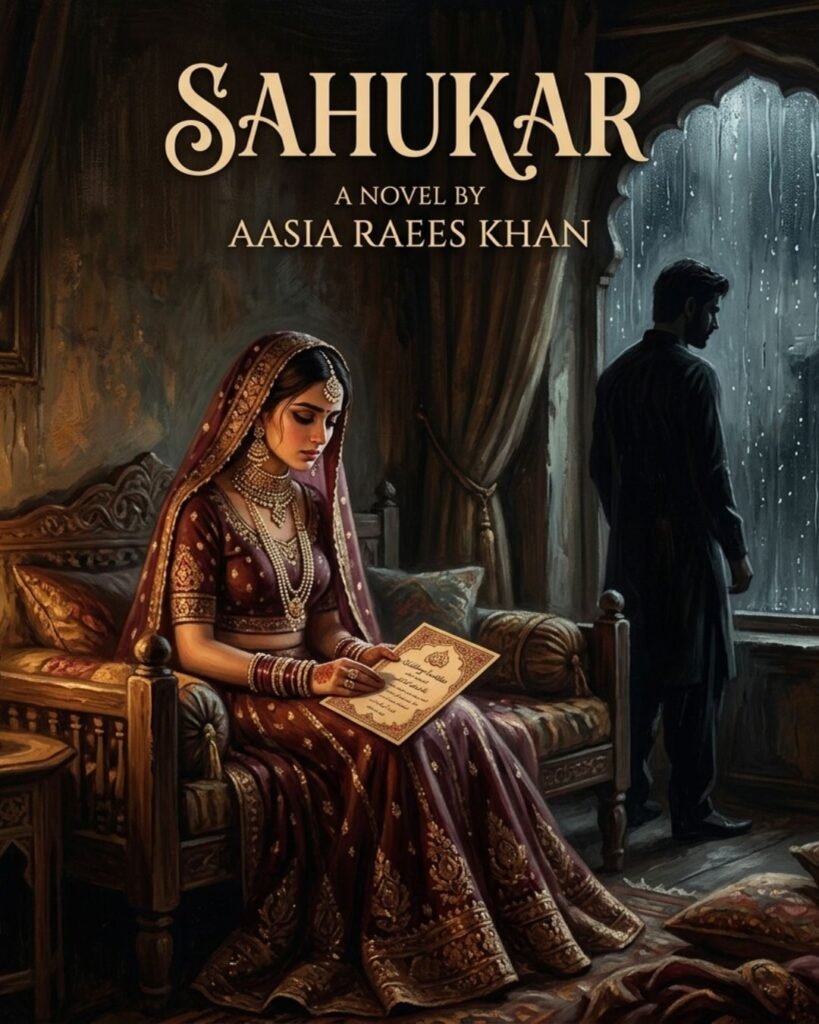
Read a detailed review of Sahukar by Aasia Raees Khan, covering the full story, main characters, plot, themes, and ending.
Summary of Sahukar:
Sahukar is a social and family drama by Aasia Raees Khan revolving around Muzna, a young bride whose marriage is arranged through a nikah nama bearing her groom’s assumed name rather than his real identity, and Hasan, the man behind that hidden name, who carries his own guilt over a debt of honor tied to Shainta. The novel follows how secrets, family pressure, and buried shame can poison relationships, while patience, honesty, and forgiveness slowly work to repair what dishonesty broke.
Characters:
- Muzna – Muzna is the central female character, a young woman married off in haste after a hurried nikah whose circumstances she does not fully understand at first. Sharp-witted, emotionally guarded, and deeply hurt by the deception surrounding her marriage, she spends much of the story trying to uncover the truth about her husband and the past that shaped their union. Her journey moves from suspicion and resentment to understanding and eventual acceptance.
- Hasan – Hasan is the male lead, a man weighed down by a past obligation connected to Shainta and the shame his family’s actions caused another household. He marries Muzna under a card bearing a different name, a decision rooted in guilt rather than deceit for its own sake, and spends the novel trying to protect her from the consequences of a history he did not fully create but feels responsible for. His character represents remorse, quiet endurance, and the slow work of earning trust back.
Supporting Characters:
- Shainta – Shainta is a young woman whose family’s honor was compromised by Hasan’s relatives, and whose presence in the story exposes the wrongdoing that set the whole crisis in motion. Her pain and the accusations swirling around her push the family toward a reckoning about justice, shame, and what atonement really requires.
- Mizna’s family elders (Bade Aba and family) – The senior figures of the household whose decisions about marriage, honor, and reputation drive much of the conflict. Their insistence on protecting family name over addressing wrongdoing head-on creates much of the story’s tension, though some of them eventually push for honesty and correction.
- Firdous Aunty and Mister Martha – A couple connected to Hasan’s circle who provide him support and perspective during his lowest moments, offering a steadying presence as he tries to set things right.
- Meena and Zain-ud-Din’s family – Relatives entangled in the dispute over Shainta’s honor, whose involvement widens the scope of the scandal and forces multiple families to confront the cost of past mistakes.
Plot Overview:
The story opens on a rain-soaked night as a bride waits in a quiet room, aware that the wedding card carries her groom’s name in ink, yet unaware that the name written there is not truly his own. This unsettling detail sets the tone for the entire novel, establishing a marriage built on a hidden identity and an unspoken history that neither Muzna nor the reader fully understands at first. From this uneasy beginning, Aasia Raees Khan constructs a story about the danger of secrets kept for the sake of family honor.
As the narrative unfolds, it becomes clear that Hasan’s assumed name is tied to a much larger family scandal involving Shainta, a young woman whose reputation was damaged by the actions of Hasan’s relatives years earlier. The guilt surrounding this incident shapes nearly every decision Hasan makes, including his marriage to Muzna, which was arranged partly as an attempt to atone for wrongs he did not personally commit but feels bound to answer for. This tangled web of obligation and shame becomes the emotional core of the novel.
Muzna, meanwhile, struggles to adjust to a household thick with unspoken tension and simmering resentment. She senses that something is being hidden from her, and her attempts to piece together the truth about her husband’s past put her at odds with family members who would rather bury the scandal than confront it. Her sharp intelligence and refusal to be silenced slowly begin to unravel the layers of secrecy that surround her new home.
The novel dedicates significant space to the moral reckoning faced by the elders, particularly around the treatment of Shainta and the question of whether protecting family reputation justifies the harm done to an innocent woman. Conversations among family members about accountability, forgiveness, and the true meaning of honor give the story its social weight, pushing characters to question long-held assumptions about what it means to safeguard a family’s name.
As Hasan and Muzna’s relationship develops despite the deception at its foundation, both characters are forced to reckon with what trust actually requires. Hasan’s attempts to shield Muzna from the full truth only deepen her suspicion, while Muzna’s persistence in seeking honesty gradually chips away at the walls Hasan has built around his guilt. Their evolving bond becomes a testing ground for whether love can survive when it begins under false pretenses.
By the novel’s end, the truth about Hasan’s identity, the scandal involving Shainta, and the family’s long-buried shame comes fully into the open, forcing a reckoning that spares no one from accountability. Aasia Raees Khan closes the story on the idea that honesty, however painful in the moment, is the only foundation strong enough to rebuild a family and a marriage, and that real honor lies in correcting wrongs rather than concealing them.
Themes:
- Deception and hidden identity
- Family honor
- Guilt and atonement
- Trust
- Forgiveness
- Justice
- Marriage under pressure
- Reputation versus truth
- Family loyalty
- Emotional resilience
- Redemption
- Social accountability
Conclusion:
Sahukar is the story of a marriage built on a hidden name and the long shadow of a family’s past wrongdoing. Aasia Raees Khan uses Muzna’s search for truth and Hasan’s struggle with guilt to examine how far families will go to protect their reputation, and what it costs the people caught in between. Shainta’s pain gives the story its moral urgency, while Muzna’s determination gives it its heart. This novel reminds readers that lasting trust can only be built on honesty, no matter how difficult that honesty is to face.
Rubaru Novel by Aasia Raees Khan



One Comment