
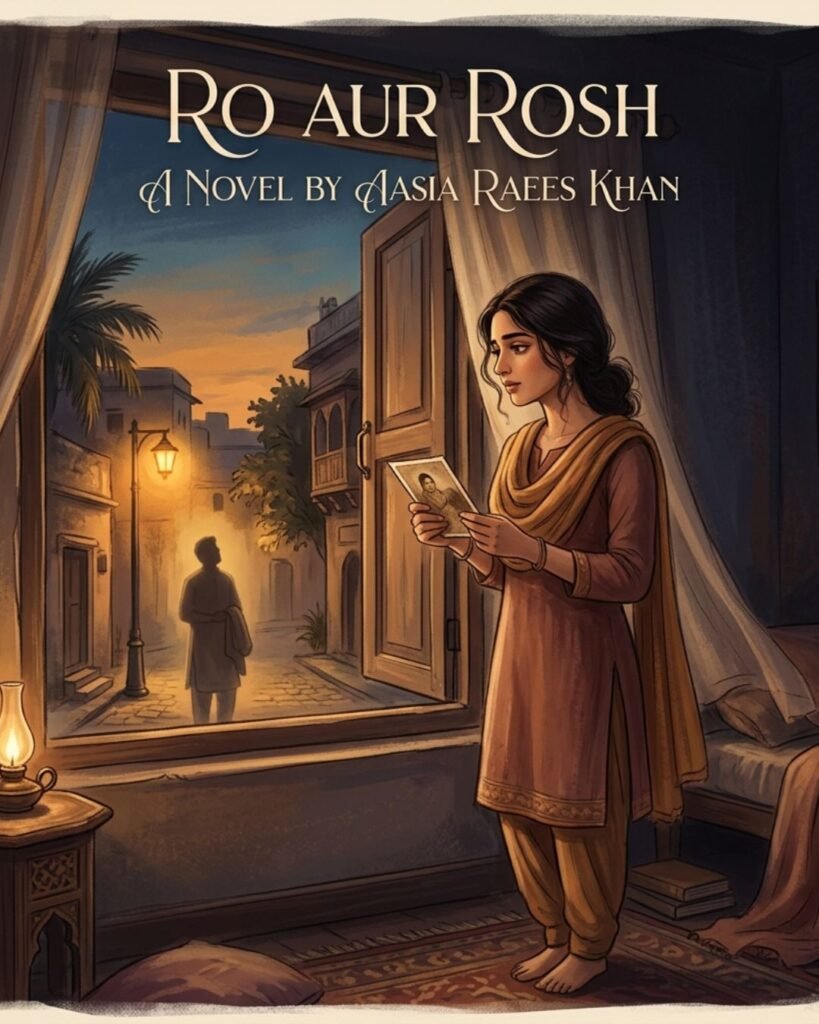
Read a detailed review of the full story, main characters, plot, themes, and ending of Ro Aur Rosh by Aasia Raees Khan.
Summary of Ro Aur Rosh:
Ro Aur Rosh is a family and romantic drama by Aasia Raees Khan that follows Tuli, a young woman who once left her home and family behind, and Dodij, the man who has quietly loved and waited for her for years. Around them revolves a strict patriarch, a web of siblings with different temperaments, and years of unspoken hurt, pride, and longing. The novel explores how distance, decisions made in anger, and the weight of family expectations can be slowly healed by patience, honesty, and forgiveness.
Characters:
- Tuli – Tuli is the central female character of the novel, a woman who chose to step away from her family and country years earlier because of painful disagreements at home. Independent, guarded, and used to living life on her own terms abroad, she is forced to confront old wounds when circumstances bring her back into contact with her family and with Dodij. Her journey through the story is one of slowly lowering her defenses and learning to trust again.
- Dodij – Dodij is the male lead of the story, a steady and patient man who has carried his feelings for Tuli through years of separation and silence. He is respectful, persistent without being forceful, and willing to face the family’s disapproval and Tuli’s resistance to reach her. His character represents quiet loyalty and the belief that real affection can survive distance and time.
Supporting Characters:
- Bade Abba (the family patriarch) – The elder head of the household whose strict rules and firm decisions about marriage and discipline shaped the lives of his children. His rigid approach caused rifts within the family, yet his character also reveals moments of regret and a desire to make amends as the story progresses.
- Talal – One of the brothers in the family whose own marriage and choices reflect the pressures of living under a dominant father figure. His conversations with his siblings about upbringing, fairness, and duty add depth to the novel’s exploration of family dynamics.
- Shahab and Naqib – Brothers who represent contrasting approaches to parenting and family responsibility, often debating whether strictness or flexibility is the better path. Their discussions highlight the generational divide within the family.
- Bari Ami – A maternal figure within the household whose presence brings warmth and occasional mediation between the stubborn men of the family and the women who bear the consequences of their decisions.
Plot Overview:
The story opens with a sense of unease as a woman waits anxiously by her phone, caught between fear and the pull of old memories tied to a man from her past. This tension sets the tone for a novel built around unresolved history, where a single phone call can reopen wounds that were never truly healed. From here, the narrative begins weaving between the present and the past, showing how choices made years ago continue to shape the lives of everyone involved.
At the heart of the story is Tuli, a woman who once left her family and homeland behind after a painful falling out, choosing distance over confrontation. Her departure was not simply an act of rebellion but a response to years of rigid control from her father, whose decisions about marriage, discipline, and family honor left little room for his children’s own wishes. Tuli’s years abroad gave her independence and a sense of freedom, but they also left behind an ache she never fully addressed.
Dodij enters the story as the man who never stopped caring for Tuli, even after she distanced herself from the family. His patience becomes one of the novel’s central threads, as he navigates Tuli’s guardedness, the family’s complicated history, and his own hope that reconciliation is still possible. Unlike the elders of the family who rule through firmness and expectation, Dodij’s approach is gentle, built on waiting rather than demanding, which slowly begins to soften Tuli’s resistance.
As the family gathers again, old tensions resurface between Bade Abba and his children, particularly around the choices he made in the name of tradition and control. Conversations between brothers like Talal, Shahab, and Naqib reveal differing views on how children should be raised and how much freedom they deserve, exposing the cracks that formed within the family over the years. These exchanges give the novel its emotional backbone, showing that the conflict is not just between two people in love, but between an entire generation and the one before it.
Tuli’s return forces her to face not only Dodij but also the father whose rigidity once pushed her away. Their confrontations are marked by pain, regret, and a gradual willingness on both sides to listen rather than simply defend old positions. Aasia Raees Khan uses these scenes to question whether authority without compassion can ever truly hold a family together, and whether forgiveness is possible once trust has been broken for so long.
By the end, the novel moves toward reconciliation rather than punishment, as Tuli and Dodij find their way back to each other while the family begins to reckon with the cost of years spent enforcing control instead of understanding. The story closes on the idea that love and family bonds can survive even long separations and deep misunderstandings, provided there is honesty, patience, and a willingness to change on both sides.
Themes:
- Love
- Family conflict
- Patience
- Forgiveness
- Generational divide
- Freedom versus control
- Reconciliation
- Loyalty
- Regret
- Trust
- Tradition versus individuality
- Second chances
Conclusion:
Ro Aur Rosh is the story of a woman caught between the freedom she built for herself abroad and the family ties she never fully escaped. Aasia Raees Khan uses Tuli and Dodij’s slow path back to each other to examine the damage that rigid authority and unspoken pain can cause within a household. Bade Abba’s strictness gives the story its central conflict, while Dodij’s quiet persistence gives it heart. This novel reminds readers that even the deepest rifts can heal when patience, honesty, and love are given the time they need.
Sahukar Urdu Novel by Aasia Raees Khan



One Comment