A spiritually profound story of self-discovery, faith, guidance, emotional transformation, and the journey toward finding true purpose.
Summary of Mushaf:
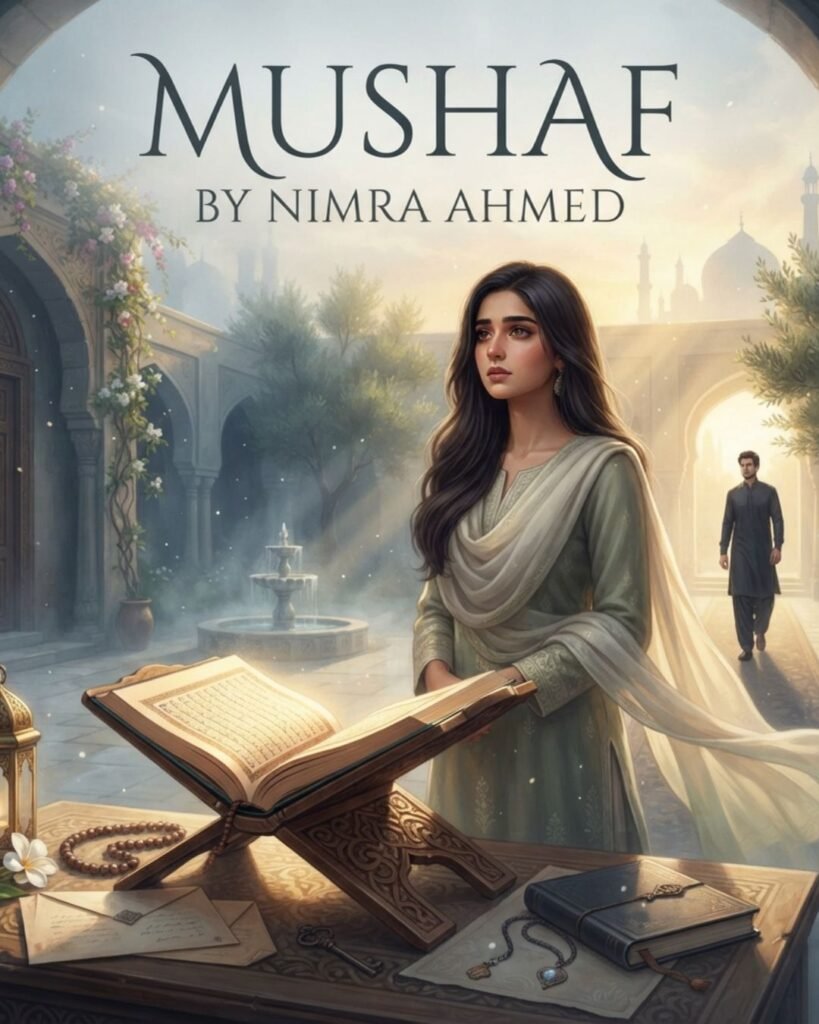
Mushaf Novel by Nimra Ahmed is a famous Urdu spiritual and emotional novel that combines family drama, betrayal, suspense, romance, and a powerful journey of faith. The story revolves around Mehmal Ibrahim, a young woman whose difficult circumstances and painful experiences gradually lead her toward a deeper understanding of the Quran. The novel explores how family injustice, material desires, betrayal, loss, and emotional suffering can transform a person’s understanding of life. At the center of the story is the Mushaf, the Quran, which becomes a source of guidance and spiritual clarity for Mehmal.
Characters:
- Mehmal Ibrahim – Mehmal Ibrahim is the central female character and protagonist of Mushaf. Her life forms the emotional and spiritual foundation of the novel. After her father’s death, she lives with her mother, Musarat, among her father’s extended family and faces unfair treatment and family conflict. These experiences make her angry, disappointed, and increasingly dissatisfied with her circumstances.
- Hamayun Dawood – Hamayun Dawood is the principal male character connected to Mehmal’s story. He is an ASP/police officer who becomes involved in the investigation surrounding Fawad. Mehmal initially misunderstands his identity and believes that she has been placed in danger, but she later discovers that Hamayun is working undercover to gather evidence against Fawad.
Supporting Characters:
- Farishtay Ibrahim – Farishtay is one of the most important supporting characters in Mushaf. She initially appears as a mysterious, masked woman whom Mehmal encounters at a madrassa. She helps Mehmal learn more about the Quran and its meanings and becomes an important guide during her spiritual transformation. Later, her deeper family connection with Mehmal becomes an important revelation. Sources identify her as Hamayun’s cousin as well as Mehmal’s sister.
- Fawad Karim (Fuwaad) – Fawad is Mehmal’s cousin and one of the main antagonistic forces in the story. He deceives Mehmal by exploiting her trust and emotional vulnerability. His actions eventually place her in a dangerous situation involving Hamayun. His betrayal becomes one of the major events that pushes Mehmal toward a completely different understanding of life.
- Musarat Ibrahim – Musarat is Mehmal’s mother. After the death of Mehmal’s father, she shares her daughter’s difficult circumstances within the extended family. Her struggles contribute to Mehmal’s frustration with the family environment and become an important part of the emotional background of the story.
- Farwa Bibi – Farwa Bibi is an important figure associated with Mehmal’s spiritual transformation. She introduces Mehmal to the Mushaf and helps initiate the process through which Mehmal begins to discover the Quran as a source of guidance.
- Aagha Karim – Aagha Karim is a member of the supporting cast connected with the family circumstances surrounding Mehmal and Fawad. His character contributes to the wider family conflict and social environment in which the central events unfold.
- Mehtaab Karim – Mehtaab Karim is another named supporting character associated with the family drama. The character belongs to the wider network of relationships that surrounds Mehmal and contributes to the novel’s exploration of family interests and conflict.
- Nana and Nani – Mehmal’s grandparents are also mentioned in character summaries as members of her family circle. They represent part of the family structure surrounding Mehmal during her difficult early life.
- Noor – Noor is listed among the leading characters in a Kitab Ghar description of Mushaf. However, the available source provides limited detail about Noor’s precise role, so it is safer not to assign an unsupported relationship or storyline to this character.
Plot Overview:
Mushaf begins with Mehmal Ibrahim living through a difficult period after the death of her father. She and her mother, Musarat, remain connected to her father’s family, but they experience unfair treatment while other relatives benefit from the family’s wealth and property. Mehmal becomes increasingly frustrated with her circumstances and begins believing that wealth and a better lifestyle could provide the happiness and security she lacks. Her emotional dissatisfaction establishes the foundation for the difficult choices she makes later in the story.
Mehmal’s cousin Fawad takes advantage of her vulnerability by giving her false promises and manipulating her trust. His deception leads Mehmal into a dangerous situation in which she is handed over to Hamayun Dawood. At first, Mehmal believes Hamayun is a threat, but the situation eventually changes when his identity as an undercover police officer becomes known. Hamayun is actually working to gather evidence against Fawad, turning what initially appears to be a frightening betrayal into a major revelation.
After escaping, Mehmal reaches a madrassa and encounters Farishtay, a mysterious woman who becomes central to the next stage of her life. Farishtay’s understanding of the Quran encourages Mehmal to look beyond her immediate suffering and search for deeper answers. Mehmal begins reading the Mushaf and gradually learns to understand its meanings rather than treating the Quran simply as a book to be recited. This marks the beginning of her spiritual awakening.
As Mehmal’s connection with the Quran becomes stronger, her personality and outlook begin to change. The verses she reads become a source of reflection during moments of fear, grief, family conflict, and uncertainty. She gradually learns the importance of patience, forgiveness, humility, and trust in Allah. Instead of allowing betrayal and hardship to define her completely, she begins using her experiences as opportunities for self-reflection and spiritual growth.
The personal relationships surrounding Mehmal become increasingly complicated. Farishtay’s identity and family connection to Mehmal are eventually revealed, while her relationship with Hamayun adds another layer of emotional conflict. Mehmal’s relationship with Hamayun also develops within these complicated circumstances. The story uses these relationships to examine jealousy, sacrifice, misunderstanding, forgiveness, and the difference between emotional attachment and genuine spiritual maturity.
The later part of the story continues Mehmal’s transformation through further tests involving family, relationships, loss, and emotional suffering. Rather than presenting faith as an instant solution to every problem, the novel portrays spiritual growth as an ongoing process requiring patience and self-correction. Mehmal ultimately becomes a more spiritually grounded person because of what she learns from the Mushaf. The story therefore concludes as a reflection on faith, forgiveness, human weakness, and the belief that divine guidance can provide direction when worldly relationships and circumstances become uncertain.
Themes:
- Faith and Spiritual Awakening
- The Quran as Guidance
- Patience and Sabr
- Betrayal and Deception
- Family Injustice
- Materialism and Worldly Desire
- Forgiveness
- Trust in Allah
- Women and Family Pressure
- Personal Growth
- Love and Relationships
- Loss and Grief
- Self-Discovery
- Moral and Spiritual Responsibility
Conclusion:
Mushaf by Nimra Ahmed is a spiritual, emotional, and socially focused Urdu novel that combines family conflict, betrayal, suspense, romance, and a powerful journey of self-discovery. At its center is Mehmal Ibrahim, whose difficult life gradually changes when she begins understanding the Quran and connecting its teachings with her own experiences. The novel’s characters add different dimensions to this journey. Hamayun Dawood brings suspense and romantic complexity; Farishtay Ibrahim becomes an important spiritual influence as well as a source of later emotional conflict; Fawad Karim represents betrayal and manipulation; while Musarat Ibrahim reflects the family hardships that shape Mehmal’s early life. Together, these characters create the personal circumstances through which Mehmal’s transformation takes place.
Hijab Urdu Novel by Amina Khan